
Is Marble Good for Kitchen Countertops?
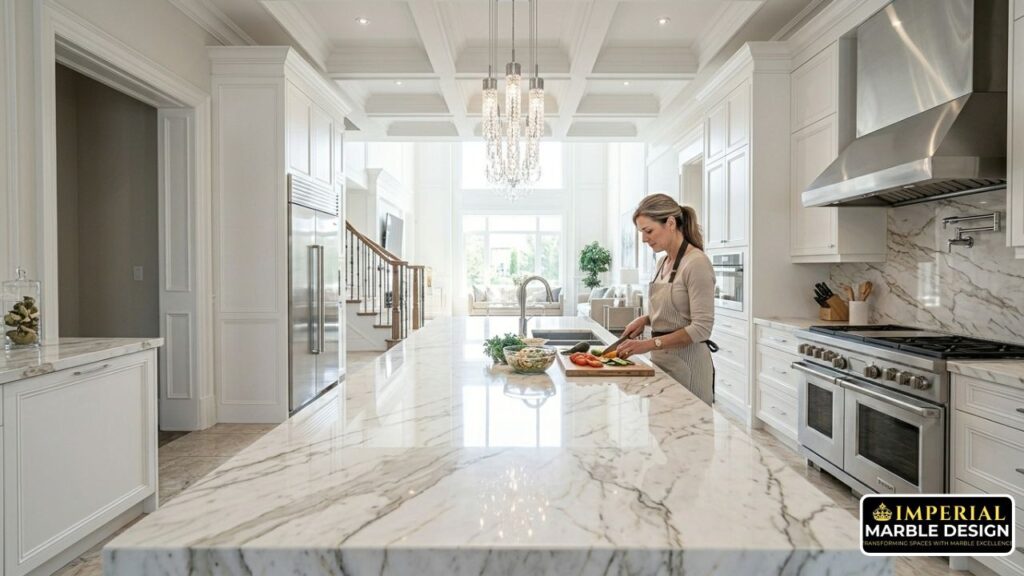
Kitchen countertops are one of the most important elements of any kitchen design. They are not only functional surfaces used for food preparation but also play a huge role in defining the visual appeal of the space. Among the many materials available for countertops today, marble countertops have always been associated with luxury, elegance, and timeless design. From classic European kitchens to modern luxury homes, marble remains one of the most desirable materials for kitchen surfaces.
But homeowners often ask a very practical question before installing it: Is marble good for kitchen countertops? The answer isn’t simply yes or no. Marble offers several advantages, but it also comes with a few limitations that homeowners should understand before making a decision.
Marble is a natural stone that has been used in architecture and design for thousands of years. Ancient civilizations such as the Greeks and Romans used marble extensively in monuments, sculptures, and buildings because of its durability and beauty. Today, marble continues to be a favorite in interior design, especially for kitchen countertops, islands, backsplashes, and bathroom vanities.
What makes marble so attractive is its unique veining patterns. No two marble slabs are identical, which means every kitchen countertop has its own natural design. This uniqueness gives marble a level of character and sophistication that manufactured materials often struggle to replicate.
However, marble is also a softer and more porous stone compared to some alternatives like granite or quartz. Because of this, it requires proper maintenance to keep it looking beautiful. Understanding the pros and cons of marble countertops can help homeowners decide whether it is the right material for their kitchen.
Understanding Marble as a Kitchen Countertop Material
What Is Marble and How Is It Formed?
Marble is a metamorphic rock formed when limestone is subjected to intense heat and pressure deep within the Earth’s crust. Over thousands of years, this process transforms the limestone into marble, giving it the smooth texture and natural crystalline structure that makes it visually appealing.
The colors and veining patterns seen in marble come from mineral impurities such as iron oxide, clay, or sand trapped during formation. These minerals create the beautiful patterns that make marble countertops unique. Popular marble varieties used in kitchens include Carrara, Calacatta, and Statuario marble, which are well known for their luxurious appearance.
Because marble is a natural stone, it has certain physical characteristics that influence its performance in a kitchen environment. One of these characteristics is porosity. Marble can absorb liquids if it is not properly sealed, which is why sealing and maintenance are important.
Despite this, marble remains one of the most iconic countertop materials in the world. Designers love its natural beauty, and many homeowners are willing to maintain it carefully in exchange for its unmatched elegance.
Why Marble Is Popular in Modern Kitchens
Marble countertops have remained popular for centuries, and their appeal hasn’t faded in modern kitchen design. One major reason is aesthetics. Marble instantly elevates the look of a kitchen, making it appear more luxurious and sophisticated.
Interior designers often describe marble as a statement material because it naturally becomes the focal point of a kitchen. Its reflective surface helps brighten the room, especially when used with light-colored cabinets and modern lighting.
Another reason for marble’s popularity is versatility. It works beautifully in many kitchen styles, including:
- Classic kitchens
- Modern minimalist kitchens
- Luxury contemporary interiors
- Traditional European-style kitchens
Marble is also widely used in kitchen islands and backsplashes, which allows homeowners to introduce luxury elements without covering the entire kitchen with marble surfaces.
Benefits of Using Marble for Kitchen Countertops
Elegant and Timeless Appearance
One of the biggest advantages of marble countertops is their timeless beauty. Unlike some trendy materials that go out of style quickly, marble has remained desirable for centuries.
The natural veining patterns create a sense of movement and depth that adds visual interest to the kitchen. When polished, marble also reflects light beautifully, making the entire space feel brighter and more spacious.
Luxury homes, high-end restaurants, and designer kitchens frequently use marble countertops because they instantly communicate quality and sophistication.
Natural Heat Resistance
Another advantage of marble countertops is their natural heat resistance. Marble can withstand high temperatures better than many synthetic materials, which makes it suitable for kitchen environments.
Professional chefs often prefer marble surfaces for baking because the stone remains naturally cool. This is especially helpful when working with pastry dough or chocolate.
However, while marble is heat resistant, it is still recommended to use trivets or heat pads to avoid potential damage from extremely hot cookware.
Adds Value to Your Home
Installing marble countertops can increase the perceived value of a home. Real estate professionals often note that luxury kitchen features play a significant role in attracting potential buyers.
High-quality marble countertops can make a kitchen look more upscale and well designed, which may help improve resale value.
The Drawbacks of Marble Kitchen Countertops
Marble Is a Porous Stone
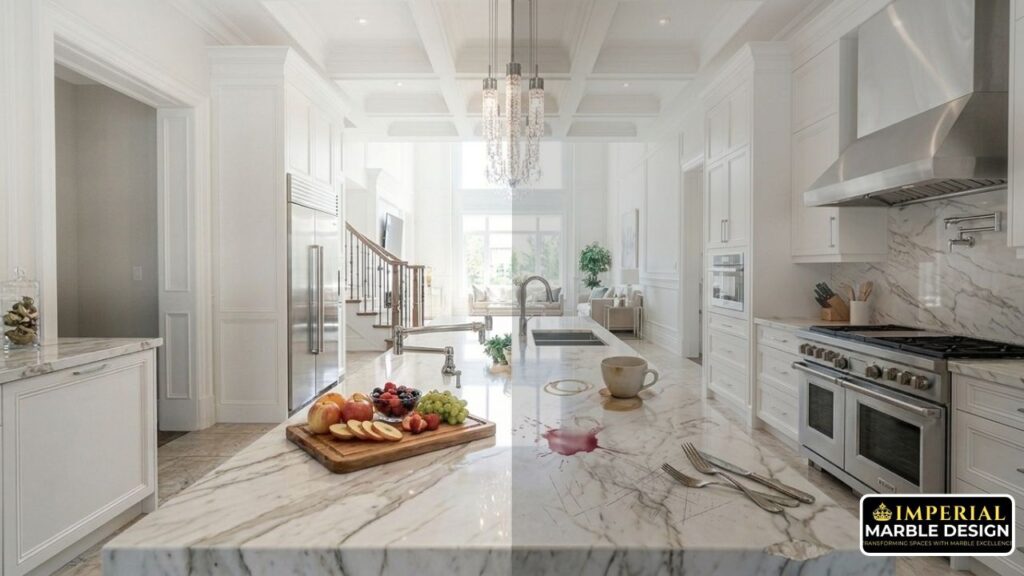
The biggest disadvantage of marble countertops is that marble is a porous material. This means it can absorb liquids like wine, coffee, or oil if it is not properly sealed.
These liquids may cause stains that are difficult to remove. Regular sealing helps reduce this issue, but homeowners must remain careful when handling acidic or colored substances on marble surfaces.
Scratches and Etching Issues
Marble is softer than materials like granite or quartz, which means it can be more susceptible to scratches. Cutting directly on marble countertops without a cutting board can damage the surface.
Another common issue is etching, which occurs when acidic substances such as lemon juice, vinegar, or tomato sauce react with the marble surface. This reaction can leave dull spots that require polishing to restore.
Maintenance Requirements
Compared to other countertop materials, marble requires more maintenance. Homeowners need to clean spills quickly, avoid acidic cleaners, and reseal the stone periodically.
Some homeowners see this maintenance as a disadvantage, while others consider it a small trade-off for the beauty marble provides.
Marble vs Other Countertop Materials
| Feature | Marble | Granite | Quartz |
| Appearance | Natural elegant veining | Natural speckled look | Uniform modern style |
| Durability | Moderate | Very high | High |
| Maintenance | High | Medium | Low |
| Heat Resistance | High | Very high | Moderate |
| Cost | High | Medium to high | Medium to high |
Cost of Marble Kitchen Countertops
The price of marble countertops varies depending on the type of marble, slab size, thickness, and installation complexity.
On average, marble countertops cost $60 to $200 per square foot, including materials and installation. Luxury marble varieties such as Calacatta can be even more expensive.
Additional costs may include:
- Edge finishing
- Custom cutting
- Installation labor
- Sealing and polishing
How to Maintain Marble Countertops
Cleaning Tips
Maintaining marble countertops starts with proper cleaning habits. Always use a pH-neutral cleaner designed for natural stone.
Avoid harsh chemicals like bleach, vinegar, or acidic cleaners that can damage the marble surface.
Sealing and Protection
Sealing marble countertops every 6 to 12 months helps protect them from stains and moisture. A good sealant creates a barrier that reduces liquid absorption.
Using cutting boards and coasters also helps prevent scratches and stains.
Conclusion
Marble countertops remain one of the most elegant choices for kitchen design. Their natural beauty, luxurious appearance, and timeless appeal make them highly desirable in modern homes.
However, marble also requires proper maintenance and care. Understanding both the advantages and limitations allows homeowners to make an informed decision before installing marble in their kitchen.
For those who value beauty and are willing to maintain it, marble countertops can be an exceptional addition to any kitchen.
FAQs
1. Is marble good for kitchen countertops?
Yes, marble is excellent for kitchen countertops due to its beauty and heat resistance, but it requires maintenance.
2. Does marble stain easily?
Marble can stain if it is not properly sealed or if spills are left unattended.
3. Is marble better than granite for kitchens?
Granite is more durable, but marble offers a more luxurious appearance.
4. How often should marble countertops be sealed?
Most experts recommend sealing marble countertops every 6–12 months.
5. Are marble countertops expensive?
Yes, marble countertops are considered a premium material and usually cost more than standard countertop options.